

I. General Semi-Trailers
- Core Definition: General semi-trailers are the most widely used and versatile basic models in the semi-trailer industry. They need to be used with tractors, have no independent power, and rely on tractors for traction. General semi-trailers have a simple body structure, mainly in the form of flatbed with sideboards or enclosed van.
- Core Structure: General semi-trailers are mainly composed of frame, axles, suspension system, kingpin and cargo compartment (flatbed with sideboards/enclosed van). The number of axles is mostly 2-3, and the load capacity ranges from 20 to 50 tons according to different configurations, which is suitable for most conventional cargo transportation needs.
- Applicable Scenarios: Focusing on general cargo transportation, general semi-trailers cover various goods without special transportation requirements such as building materials, home appliances, daily necessities, grain and general merchandise. General semi-trailers are widely used in highway trunk transportation, urban distribution, short-distance transshipment and other scenarios, and are the "basic carrier" of the logistics and transportation industry.
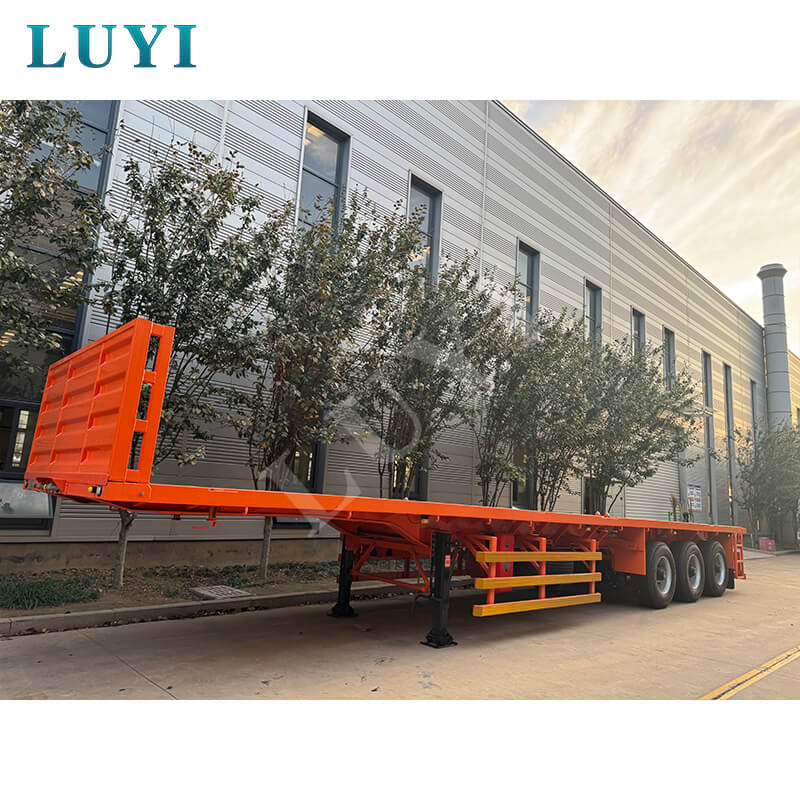
- Industry Advantages: General semi-trailers have moderate manufacturing costs, convenient maintenance, adapt to various tractors, and flexible loading and unloading methods (can be used with forklifts and cranes). With strong versatility, general semi-trailers do not require special operating skills, have the largest market ownership, and accessories are easy to purchase.
- Notes: General semi-trailers do not have automatic unloading function, and loading and unloading need to rely on external equipment; when transporting fragile and vulnerable goods, additional protective measures must be taken to avoid goods damage; general semi-trailers must be transported in strict accordance with the load limit to prevent overloading.

II. Dump Semi-Trailers
- Core Definition: Dump semi-trailers are special models equipped with a hydraulic lifting system on the basis of general semi-trailers. Dump semi-trailers can control the tilting of the cargo compartment through hydraulic devices to realize automatic unloading of goods without external loading and unloading equipment, focusing on the demand for "efficient unloading".
- Core Structure: On the basis of the conventional semi-trailer structure, dump semi-trailers add a hydraulic lifting system (hydraulic pump, hydraulic cylinder, control valve) and a tiltable cargo compartment (mostly U-shaped or rectangular). The number of axles is mostly 3-4, and the load capacity is concentrated between 30 and 80 tons, which is suitable for heavy-duty cargo transportation.
- Applicable Scenarios: Dump semi-trailers are mainly used for transporting bulk and block goods, including sand, gravel, coal, ore, dregs, construction waste, grain (bulk), etc. Dump semi-trailers are widely used in mines, construction sites, ports, building materials factories and other scenarios, especially suitable for operating environments that require frequent unloading.
- Industry Advantages: Dump semi-trailers have high unloading efficiency, do not rely on external equipment such as forklifts and cranes, can quickly complete the unloading operation, and save labor and time costs; the cargo compartment is made of high-strength steel, which is wear-resistant and impact-resistant, suitable for heavy-duty and harsh operating environments; some models can be customized with cargo compartment size to meet different cargo needs.
- Notes: The hydraulic lifting system of dump semi-trailers needs regular inspection and maintenance to prevent oil leakage and failures affecting unloading; when unloading, a flat and solid site must be selected to avoid safety accidents caused by excessive tilting of the vehicle body; when transporting viscous goods (such as wet dregs), anti-sticking treatment of the cargo compartment must be done to avoid residue.

III. Lowboy Semi-Trailers
- Core Definition: Lowboy semi-trailers are special semi-trailers with extremely low platform height (usually 0.8-1.2 meters from the ground). The platform of lowboy semi-trailers is a flat structure without sideboards or with foldable sideboards, focusing on the transportation of "overwidth, overheight and overweight" large equipment, which are special transportation models.
- Core Structure: The frame of lowboy semi-trailers adopts a low-center-of-gravity design, the platform is flat and low, the suspension system is mostly hydraulic suspension (height-adjustable), the number of axles is 3-6, the load capacity is extremely strong, up to 50-200 tons, and some models can be equipped with steering axles to improve driving flexibility.

- Applicable Scenarios: Lowboy semi-trailers are specially used for transporting large, heavy equipment and non-detachable large goods, including engineering machinery (excavators, loaders, cranes), large tanks, bridge components, wind power equipment, heavy machine tools, etc. Lowboy semi-trailers are widely used in engineering construction, large-scale logistics, port transshipment and other scenarios.
- Industry Advantages: The low platform height of lowboy semi-trailers facilitates the loading and unloading of large equipment (which can be directly driven in or through ramps); lowboy semi-trailers have strong load capacity and can adapt to various overweight and oversized goods; the hydraulic suspension can adjust the platform height to meet different transportation road conditions and loading and unloading needs, with good driving stability.
- Notes: Lowboy semi-trailers are special models with weak versatility and cannot transport conventional scattered goods; when transporting large goods, it is necessary to go through the approval procedures for over-limit transportation in advance and abide by traffic control regulations; during driving, the speed of lowboy semi-trailers must be controlled to avoid sudden braking and sharp turns to ensure the safety of goods and driving; the suspension system and axles of lowboy semi-trailers should be regularly inspected to ensure stable driving under heavy loads.
IV. Summary of Core Differences Between the Three
General semi-trailers: Universal, no special functions, suitable for conventional goods, high cost performance and large ownership; Dump semi-trailers: Equipped with hydraulic lifting, automatic unloading, suitable for bulk and heavy-duty goods, focusing on efficient operation; Lowboy semi-trailers: Low platform, high load capacity, special for large goods transportation, suitable for large equipment, high professionalism. The three cover different transportation scenarios, jointly form the core categories of the semi-trailer industry, and meet the diversified needs of logistics transportation, engineering construction and other fields.